
You order tacos, the salsa arrives, and you face one of Mexican food’s smallest but most important decisions: mild, medium or hot? Go too mild and your meal may lack spark. Go hotter than you enjoy and the salsa can drown out everything else on the plate.
You don’t need to be a chile expert to choose well. Once you understand what creates salsa heat, how the levels differ and how salsa works with different foods, picking the right one gets easy. This guide covers the Scoville scale, why color tells you less than you think, which heat levels suit which dishes and what to do when a salsa turns out hotter than expected.
Salsa Heat Levels Explained (Quick Answer)
- Mild salsa puts tomatoes, tomatillos, herbs, citrus, roasted vegetables and spices first, with chile heat kept in the background.
- Medium salsa brings noticeable warmth while still letting you taste the food underneath.
- Hot salsa puts chile heat front and center, often with a stronger, longer-lasting burn.
There’s one important catch: no universal standard officially defines mild, medium or hot. The labels are relative. One restaurant’s “medium” can feel hotter than another’s “hot,” and two people can experience the same salsa very differently. The best heat level isn’t the one with the biggest warning sign. It’s the one that makes your meal taste better.
What Makes Salsa Spicy?
Salsa heat comes mainly from capsaicinoids, especially capsaicin. Capsaicin activates heat and pain receptors in your mouth, so your nervous system reads it as burning even though the food isn’t physically hot.
How spicy a salsa ends up depends on:
- The chile variety
- How much chile goes in
- The ratio of chile to tomato or tomatillo
- How it’s prepared, including how much of the pepper’s inner membrane is used
- The individual pepper, since heat varies even within one variety
That’s why mild, medium and hot describe the eating experience rather than a precise scientific measurement.
The Scoville Scale: How Chile Heat Is Measured
Chile heat is measured in Scoville Heat Units (SHU). The higher the number, the more heat-producing capsaicinoids a pepper contains. Here are commonly cited ranges for peppers often used in Mexican cooking:
| Chile Pepper | Commonly Cited Range | General Impression |
| Poblano | About 1,000–1,500 SHU | Mild |
| Jalapeño | About 2,500–8,000 SHU | Mild to moderately hot |
| Serrano | About 10,000–23,000 SHU | Noticeably hot |
| Habanero | About 100,000–350,000 SHU | Very hot |
Treat these as rough guides. Published ranges differ by source, and growing conditions and cultivars create big swings. New Mexico State University’s NuMex Jalmundo jalapeño, for example, measures around 17,000 SHU, well above the typical jalapeño range.
A pepper’s Scoville rating also isn’t the rating of the finished salsa. Tomatoes, tomatillos, onions, herbs, citrus and other ingredients dilute and balance the chile, so a salsa made with jalapeño isn’t “8,000 SHU.”
Mild vs Medium vs Hot Salsa at a Glance
| Heat Level | What You Experience | Pairs Well With | Choose It If… |
| Mild | Little burn; fresh, roasted, tangy or savory flavors lead | Fish, shrimp, chicken, vegetables, breakfast dishes | You want salsa flavor without lingering heat |
| Medium | Clear warmth, with the food still easy to taste | Chicken, al pastor, carnitas, quesadillas, tacos | You like spice but want balance |
| Hot | Strong, sustained chile heat that may build or linger | Rich meats, hearty tacos, burritos, nachos | You actively enjoy chile burn |
Mild: Flavor First
Mild salsa is a great fit if you’re new to spicy food, dining with children or sensitive to heat, or if you want the taco filling to stay the star. Mild doesn’t mean boring. Many of the most flavorful salsas keep heat low on purpose and build complexity through roasting, citrus, herbs, garlic and seasoning.
Medium: The Sweet Spot for Many Diners
Medium is where heat becomes obvious without taking over. Here’s a simple test: if you notice the warmth but immediately want another bite, you’re probably near your ideal level. Medium heat also cuts nicely through fat, cheese, avocado and slow-cooked meat.
Hot: When Chile Becomes Part of the Main Event
Hot salsa is for people who enjoy a pronounced burn, not just tolerate it. The heat may hit right away or build over several bites, and it can linger. It works best with rich, substantial food that can stand up to it. If the salsa keeps you from tasting the rest of the meal, it’s gone past enhancing the dish. The goal is balance, not bragging rights.
Does Color or Style Tell You How Hot a Salsa Is?
No. The chile variety and amount matter far more than color or style.
- Red vs green: A green salsa made with plenty of serrano can easily be hotter than a red tomato salsa made with a small amount of a milder chile. A deep red roasted salsa can taste intense yet carry little heat.
- Salsa verde: “Salsa verde” simply means green sauce. Many versions use tomatillos or other green ingredients with green chiles, herbs, onion, garlic or lime. Some are gentle and tangy, others are fiery.
- Pico de gallo: This fresh, uncooked salsa of tomato, onion, cilantro, lime and chile often looks mild, but a chile-heavy version has a real kick.
- Roasted tomato salsa: Roasting adds depth, sweetness and smokiness, which can make a salsa taste intense even when its heat is moderate. Roasting doesn’t make a salsa mild either.
The key distinction is between flavor intensity and heat intensity. Understanding the difference is one of the easiest ways to choose better. When heat matters to you, ask about the chile instead of judging by appearance. For more on how Mexican dishes balance heat with other elements, see how Mexican cuisine balances spice, acid and texture.
How to Match Salsa Heat to Your Meal
The right heat level belongs to the combination, not just the sauce. A salsa that overwhelms chicken may feel perfectly balanced on carnitas.
| Dish | Suggested Heat | Why |
| Grilled chicken | Mild to medium | Keeps the grilled flavor noticeable; go hot if you want spice to lead |
| Al pastor | Medium | Adds warmth without burying the savory, sweet and tangy notes; hotter creates a sweet-heat contrast |
| Carnitas | Medium or hot | Rich, slow-cooked pork stands up to bold salsa; a bright salsa adds freshness |
| Fish and shrimp | Mild or medium | Keeps delicate seafood flavor in focus |
| Quesadillas | Any | Cheese balances heat; mild adds brightness, hot adds contrast |
| Nachos | Medium or hot | Needs enough presence to stand out among cheese, meat and toppings |
Want to understand the fillings themselves? Our guide to birria vs barbacoa vs carnitas vs al pastor breaks down how each one tastes.
Try a Salsa Trio Tasting at Taco Tequila Co.
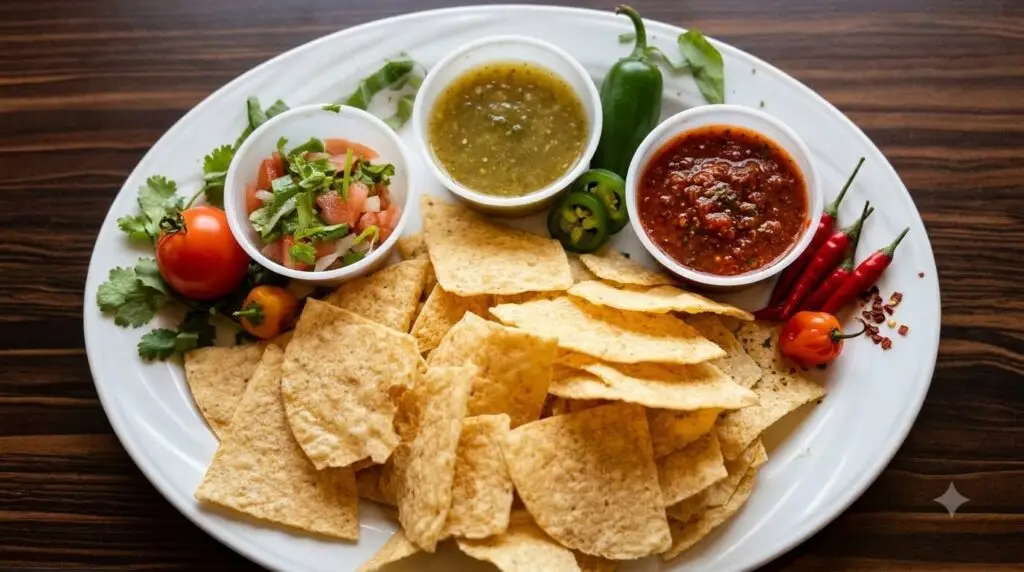
The easiest way to find your heat level is to taste salsas side by side. At Taco Tequila Co. in New Port Richey, the Chips and Salsa Trio ($8.99) comes with roasted tomato salsa, salsa verde and pico de gallo. Here’s how to taste them:
- Start small. Try a little of each on a chip, one at a time.
- Notice the first flavor, whether it’s roasted, tangy, fresh or herbal.
- Track the heat. Does it arrive right away or build after a few seconds?
- Notice what lingers once the heat fades.
Then pair them with Mini Street Tacos ($10.99): three soft tacos with your choice of al pastor, carnitas or grilled chicken, topped with onions and cilantro, with fish available as a substitute. Trying the same salsa on different proteins quickly shows you which combinations work for your palate.
Taco Tequila Co. doesn’t publish a mild-to-hot ranking for its three salsas, so if you’re sensitive to heat, ask the team which is mildest or hottest that day. See the full menu for more options, including sizzling fajitas, house-made guacamole, loaded nachos and fusion burritos. If you’ve ever wondered about that sizzle, read why fajitas sizzle.
Why Salsa Feels Hotter to Some People, and Hotter With Every Bite
Two people can eat the same spoonful and describe it completely differently. Past exposure to capsaicin, individual sensitivity, how much salsa you eat, what else you’re eating and even the order of your bites all affect how hot it feels.
Heat also builds during a meal. Capsaicin keeps stimulating receptors as you eat, so the fourth spoonful can feel much stronger than the first even though the salsa hasn’t changed. If you’re unsure of your tolerance, start conservatively. You can always add more, but you can’t take hot salsa back off a fully dressed taco.
What to Do When Your Salsa Is Too Hot
Reaching for water is instinctive, but it isn’t very effective. According to Cleveland Clinic, capsaicin doesn’t dissolve in water. Milk works better because it contains casein, a protein that breaks down capsaicin. Plant-based milks such as almond or oat don’t contain casein, so they won’t help the same way.
Carbohydrates help too, though less effectively than milk, so a bite of tortilla can give your palate a break. At Taco Tequila Co., the TTC Quesadilla ($12.99) comes with sour cream and guacamole on the side, an easy way to cool things down if you go big on the hot salsa.
One caution: if spicy food tends to give you reflux or stomach discomfort, milk won’t fix that. Choosing a lower heat level is the smarter move.
Does Removing the Seeds Make Salsa Milder?
Partly. Most of a pepper’s capsaicin sits in the inner membrane that holds the seeds, not in the seeds themselves. Removing that membrane along with the seeds reduces heat. Still, chile variety matters most: a carefully trimmed very hot pepper can stay much hotter than an untrimmed mild one.
Is Hotter Salsa More Authentic?
No. Heat isn’t a measure of authenticity. Mexican cuisine is regionally diverse and uses chiles for flavor, aroma, fruitiness, smokiness, color and complexity, not just heat. Some sauces are fiery, others gentle by design. Taco Tequila Co. describes its food as authentic Mexican-inspired flavors with a modern twist, built on real ingredients, bold spices and traditional techniques. The right question is whether the chile complements the food. For more, explore our complete guide to authentic Mexican cuisine.
How to Find Your Personal Heat Level
Start one level below what you think you want and taste before covering your meal. Then use your reaction as a guide:
| Your Reaction | What It Means |
| “I barely notice any heat.” | You can comfortably move up a level. |
| “Warm, flavorful, and I want another bite.” | You’ve likely found your ideal range. |
| “Spicy, but enjoyable.” | A good choice when you want heat to lead. |
| “I can’t taste the taco anymore.” | Too hot for this meal. |
| “This is painful.” | Step down a level or two next time. |
The right salsa should make you want another bite of the food, not leave you recovering from the sauce.
Frequently Asked Questions
When is Taco Tequila Co. open?
Lunch and dinner are served daily from 12 p.m. to 10 p.m. Breakfast runs Thursday through Sunday from 7:30 to 11 a.m., and happy hour is Monday through Friday from 5 to 7 p.m. Check out our weekly specials too.
Does Taco Tequila Co. have vegetarian or gluten-free options?
Yes. The menu includes choices for vegetarian and gluten-free diners, such as veggie quesadillas. Ask your server for help choosing a salsa and dish that fit your needs.
Choose Flavor First, Heat Second
The best salsa isn’t automatically the hottest one on the table. Mild lets fresh, roasted and tangy flavors lead. Medium adds warmth while keeping balance. Hot makes the chile itself a major part of the meal. Because the labels are relative, the pepper, the recipe, the food you pair it with and your own palate all matter more than the word on the menu.
Come try the Chips and Salsa Trio at Taco Tequila Co., inside Quality Inn & Suites in New Port Richey. Start with a small taste of each, find the heat level that makes your tacos better and build from there.
Taco Tequila Co.
Inside Quality Inn & Suites, US-19 N, New Port Richey, FL 34652
(727) 777-5510 | Contact Us